






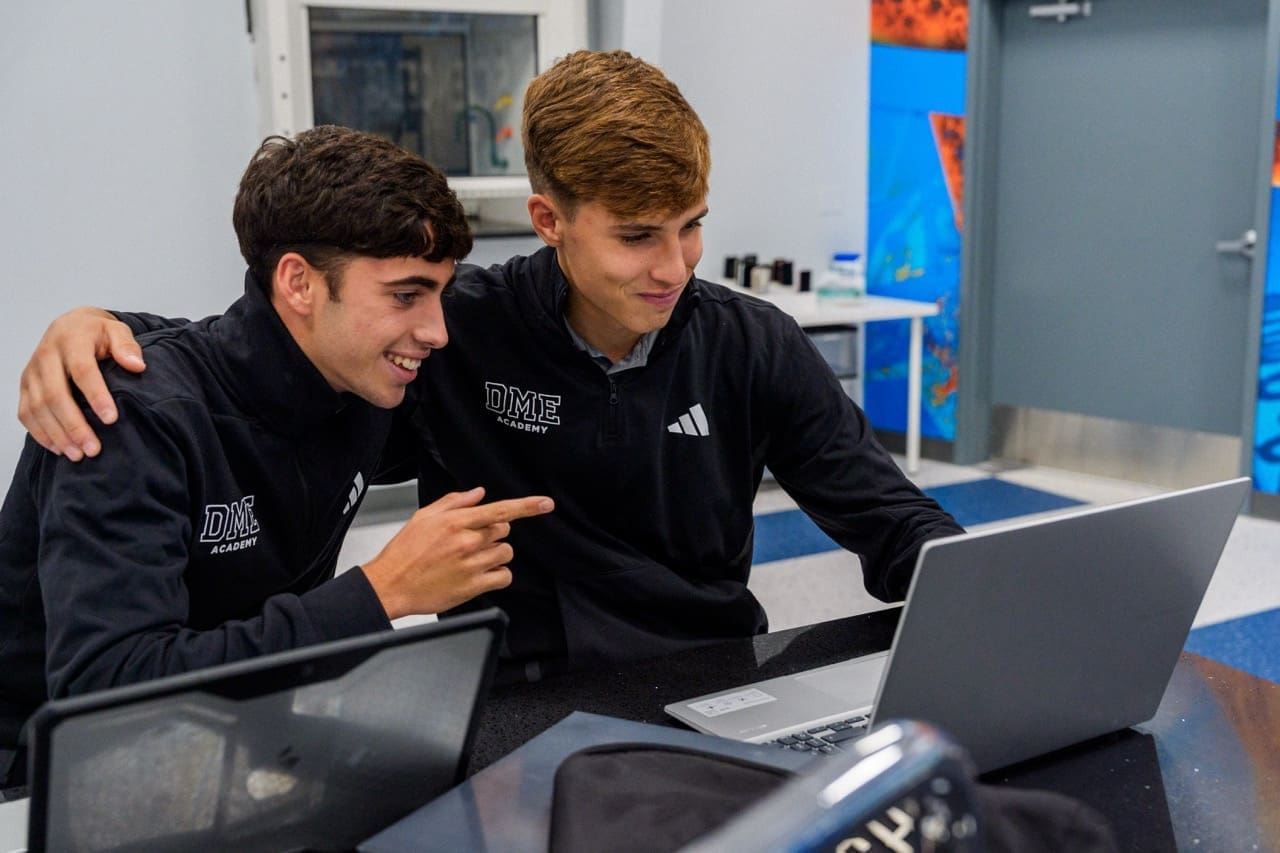
From basketball player and entrepreneur to founder of DME Academy, Mike Panaggio firmly believes that hard work, discipline, and character determine how far a person can go. Through DME Academy, he hopes to help young people develop the skills to face future challenges while pursuing athletic achievements and university opportunities.
In Daytona Beach, Florida, there is an academy that attracts young athletes from all over the world to pursue their dreams—DME Academy.
Here you'll find intense athletic training, fiercely competitive teams, and opportunities for college admissions with a focus on American universities. However, co-founder Mike Panaggio hopes that students will build confidence, discipline, interpersonal skills, and a sense of responsibility while pursuing their athletic dreams.
He often thinks about whether students are ready for the next stage of their lives after they leave DME or even end their athletic careers.
This philosophy stems from his own experience spanning competitive basketball, boarding schools, and business management.
From the basketball court to business: Success is never accidental.
Mike Panaggio grew up in a basketball family; his father, Mauro Panaggio, is a veteran basketball coach. Growing up surrounded by basketball, it became an important environment for him to learn about competition, responsibility, and teamwork.
He attended the prestigious American boarding school Deerfield Academy before joining SUNY Brockport to play college basketball, where he set numerous school records and was inducted into the school's Hall of Fame. After graduating, he also pursued a professional basketball career in the Continental Basketball Association (CBA).
His experiences during this period profoundly influenced his views on education and talent cultivation.
In a competitive environment, talent is certainly important, but without continuous effort, acceptance of guidance, and a willingness to sacrifice, long-term success is difficult to achieve. In the group life of boarding school, he also learned the importance of independent living, how to get along with people from different backgrounds, and how to take responsibility for his choices.
After leaving professional basketball, Mike brought these experiences into the business world.
In 1984, he founded DME, which started as a small company with only seven employees and gradually developed into a corporate organization with hundreds of employees and multiple business brands.
From competitive basketball to business management, two seemingly different worlds, he sees similar principles for success: setting high standards, finding outstanding talent, continuous investment, and constant improvement.

Founding DME Academy: Establishing a genuine development platform for young athletes
In 2015, Mike and his brother Dan Panaggio founded DME Academy in Daytona Beach, Florida.
Dan has extensive professional and college basketball coaching experience in the NBA and NCAA, while Mike brings his business management, organizational development, and talent development philosophies to the college.
The two hope to create an environment that supports the long-term development of young athletes, allowing students to receive professional training while also preparing them for university and their future lives.
In the United States, a large number of high school athletes hope to get into college through basketball every year, but basketball skills alone are not enough to guarantee their ideal opportunity.
Students must possess sufficient academic ability, understand the competitive levels of different universities, and learn to showcase their strengths to university coaches.
Therefore, DME Academy has integrated sports training, college admissions, and player development from the very beginning.
In Mike's plan, in addition to training the players, the coach also needs to understand the individual needs of each student and help them find a suitable path for further education.
College placement needs to take into account students' long-term development and ensure that they still have enough opportunities to continue to improve after entering university.

The difference with DME: Social Fitness that teaches students how to get along with others.
When discussing the differences between DME Academy and other sports academies, Mike emphasized one particular concept—Social Fitness (Social Adaptation and Interpersonal Skills)。
In an era dominated by smartphones and social media, young people may spend a lot of time communicating online, but are gradually reducing opportunities for face-to-face communication.
This is a phenomenon he pays particular attention to.
In addition to learning to shoot, pass, and execute tactics, an athlete also needs to know how to proactively communicate with coaches, respect teammates, deal with differing opinions, and build relationships in unfamiliar environments.
Especially after students enter university, they will face more complex team cultures, academic pressure, and independent living.
Even if a player possesses exceptional athletic ability, but is unable to cooperate with others, express their needs, or handle conflict, their future development may still be limited.
Therefore, DME Academy hopes that students will gradually develop the ability to adapt to their environment and solve problems independently through real interpersonal interactions in their daily lives.
This experience is especially important for students from different countries.
Young people from different languages, cultures, and backgrounds live, train, and compete together. In addition to being exposed to American basketball culture, they can also get to know each other through daily interactions and learn to respect different viewpoints and lifestyles.
Mentorship and Personal Interaction: Students Shouldn't Just Be Names on a Team Roster
Mike believes that a successful Sport Academy needs excellent coaches, excellent facilities, and a high-level competitive environment, but it is equally important that students receive continuous attention and guidance from coaches, teachers, and academy leaders.
He values direct communication with students, understanding their thoughts, difficulties, and goals through daily interactions.
This mentorship relationship allows education to extend beyond the classroom and training grounds.
Students may gain a new understanding of the meaning of effort and responsibility from a conversation, a setback, or a coach's demands on them.
Mike emphasized that young people need clear standards.
Success doesn't mean performing perfectly every day. When standards aren't met, students need to learn to acknowledge their shortcomings, think about how to adjust, and do better next time.
In such a culture, coaches also bear the responsibility of guiding students to establish good habits, values, and self-discipline.
Not everyone needs to be a star: Find the right stage for yourself.
In the competitive environment of American high school basketball, many students and parents hope to join the strongest team, gain the best exposure, and ultimately have the opportunity to qualify for NCAA Division I.
But Mike has a more pragmatic view on player development.
Different players have different physical conditions, technical maturity, competitiveness and academic background, so they should not be judged by the same set of standards.
DME Academy provides students with opportunities to train, compete, and grow in an environment that suits them through teams at different competitive levels and development programs.
Even if a player cannot currently join a top-level team, it does not mean that there is no room for future development.
Similarly, players with exceptional talent also need to carefully evaluate the college environment to confirm whether the school truly meets their needs.
College planning must take into account the student's actual circumstances, including their role on the court, playing opportunities, academic needs, and future goals.
A truly good college placement should allow students to continue to grow after entering the next environment.
This is why DME Academy emphasizes contact with college coaches, player evaluation, and individual development planning.

Pursuing Excellence: Making Continuous Improvement a Lifestyle
Mike's business philosophy has a common core:The pursuit of excellence must be put into practice in every day.。
He values hard work, sacrifice, and responsibility, and hopes that young people will understand that growth is often accompanied by a difficult process.
When players face intense competition, training plateaus, or pressure to get into college, he encourages students to confront the problems and think about what can be improved.
This requirement is also reflected in academic studies and daily life.
Even if you perform well today, you still need to keep working hard tomorrow; even if you encounter failure, you should learn from the experience and readjust your pace.
Mike hopes that students can gradually develop this thinking habit, making self-discipline an intrinsic motivation and reducing their reliance on coaches or parents for supervision.
This ability will become a long-term asset that sports education leaves for young people.
Looking to the future: A stronger academic system and international development opportunities
DME Academy's development continues to extend beyond competitive training.
Continuously improving the academic environment, expanding international exchanges, and creating more opportunities for students to showcase their abilities are important directions for the college's long-term development.
Mike hopes that DME can establish a more comprehensive academic support system, allowing students to prepare for their future university education while pursuing competitive performance.
International exchange and talent recruitment are also important development directions for the college.
Through events such as international showcases, DME allows young athletes from different countries to experience the American training and evaluation environment, and also helps more families understand the various options for American sports education and college admissions.
This international perspective reflects Mike's understanding of sports. The opportunities for exchange created by sports allow people from different cultural backgrounds to get to know each other and bring broader life experiences to young people.

Success that lasts longer than victory
For many young athletes, the dream might be to enter NCAA Division I, win a college scholarship, or even become a professional player.
Mike Panaggio understands the importance of these goals because he himself has walked the path of competitive sports.
Years of experience in basketball and business have gradually made him realize that a sports career is just one stage of life.
The discipline, resilience, communication skills, sense of responsibility, and courage to keep going in the face of challenges that are cultivated through sports can all play an important role in one's future life.
Since founding DME Academy in 2015, Mike and his team have been exploring how professional sports training, academic development, and personal growth can support each other.
As more and more players go on to American universities from DME, the academy’s influence is gradually extending to all parts of the world.
Behind these academic achievements and athletic successes, Mike always focuses on the students' personal growth. He hopes that the young people's time at DME will be a memorable experience, and that they will continue to apply everything they have learned there after leaving campus.
True success is not just about becoming a better player on the field, but also about becoming a better person after leaving the field.


